
Concrete Cleaned Without Etching or Surface Damage
Driveway cleaning in Blairsville for concrete surfaces with oil stains, tire marks, and embedded grime that resists standard rinsing
Oil stains and tire marks do not respond to pressure alone—they require a pretreatment step that breaks the bond between the petroleum compound and the concrete surface before any water is applied. Aaron's Pressure Washing, LLC begins every driveway cleaning with a degreaser application on stained areas, allowing it to dwell and work into the concrete before the pressure phase begins. That sequencing is what distinguishes a cleaned surface from a rinsed one: skipping the pretreatment and going straight to pressure disperses the oil across a larger area without removing it, and the stain reappears clearly once the concrete dries.
After pretreatment, pressure is adjusted to match the age and condition of the concrete rather than set at a fixed level for every job. Older concrete on rural and mountain properties in this area is often more porous and surface-worn than newer flatwork, and running high pressure across a surface that has already lost surface density accelerates erosion and can leave visible etch marks at the cleaning path edges. The crew evaluates the surface condition before the pressure setting is finalized, which prevents the kind of damage that shows up as parallel light-colored lines across the slab—a sign that the pressure was calibrated to the machine's output rather than the material receiving it. Edges and drains are cleaned for a consistent finish rather than leaving a border of untreated concrete around the perimeter.
Describe the staining pattern and the approximate age of your concrete when you call, so the right pretreatment and pressure approach is ready before the crew arrives.
The Difference Between Rinsed and Actually Cleaned Concrete
Concrete is a porous material, and contaminants like oil, fuel residue, and oxidized rubber from tires penetrate below the surface layer rather than sitting on top of it. Pressure alone cannot extract material that has migrated into the pore structure—it can only remove what is sitting at the surface. The degreaser pretreatment works by breaking the molecular bond between the contaminant and the concrete, bringing it back to the surface where water pressure can then remove it. Without that step, the surface appears cleaner wet but reverts to the original stain pattern as soon as it dries.
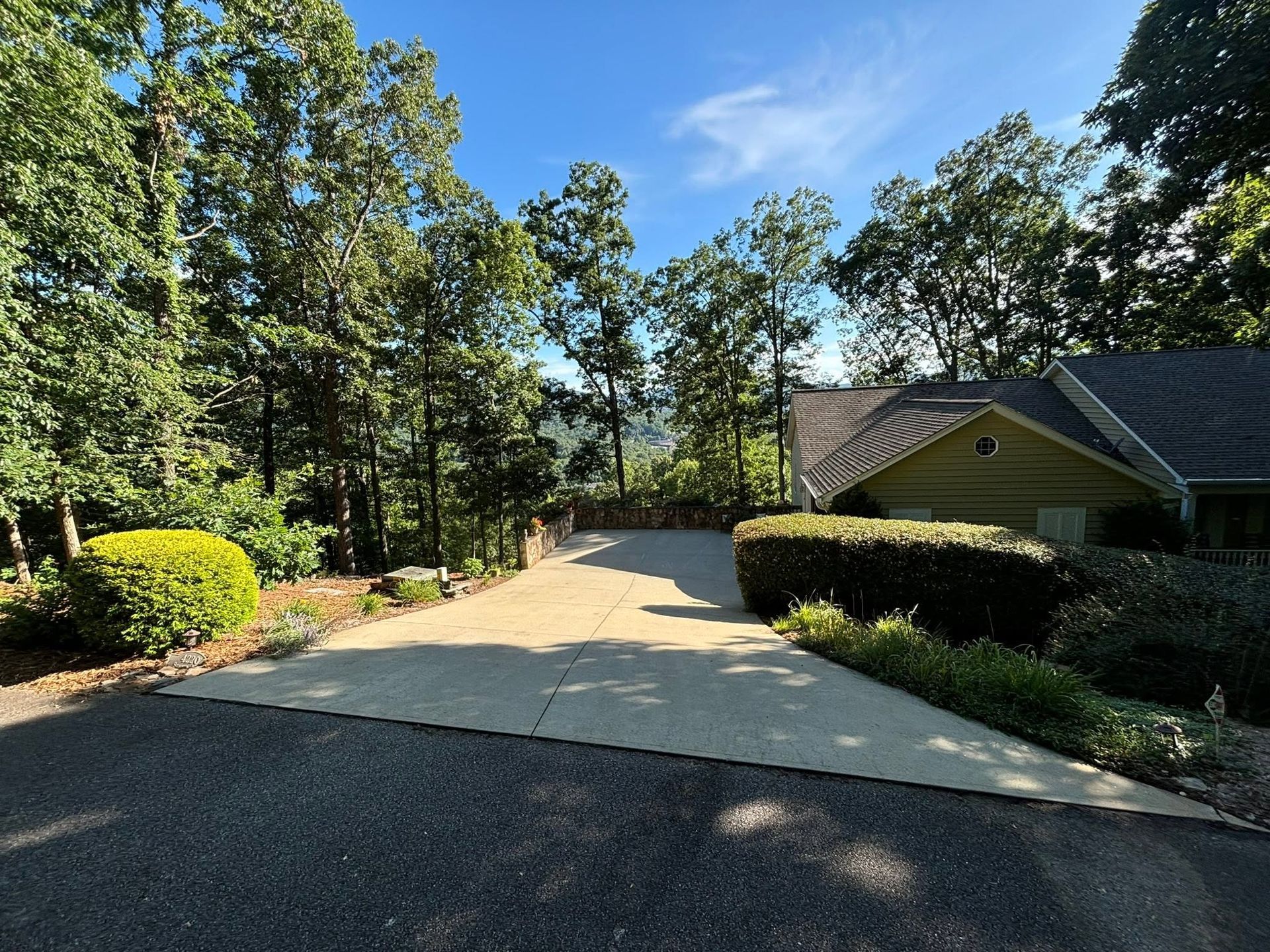
Once the work is complete, the concrete surface should be a consistent color across the full slab, with no remaining dark patches at previous stain locations and no visible tide lines where the cleaning stopped short of the edge. Drains and perimeter edges cleaned as part of the job prevent the unfinished-border appearance that results when only the central area of a driveway is treated.
Long driveways on rural properties—which are common in the Blairsville area given the lot sizes typical of mountain acreage—may include sections of different age or different concrete mix if the driveway was extended or repoured in sections. Those transitions are visible as color variation in the slab and affect the pressure setting needed to clean each section evenly. Aaron's Pressure Washing, LLC accounts for those variations rather than running a uniform setting across a surface that requires different handling in different areas.
What to Know Before Your Driveway Is Cleaned
Driveway cleaning involves surface evaluation, pretreatment decisions, and pressure calibration that vary by property. These questions address what happens during the process and what affects the outcome.
How does the crew determine what pressure to use on a given concrete surface?
The crew evaluates the surface visually before beginning—checking for existing surface erosion, aggregate exposure, and crack patterns that indicate older or more porous concrete. Surfaces that show aggregate at the top layer or micro-cracking receive lower pressure than dense, intact flatwork, because the same PSI that cleans one surface effectively will accelerate erosion on another.
What does the degreaser pretreatment involve and how long does it need to dwell?
A commercial-grade degreaser is applied directly to oil-stained areas and allowed to penetrate the pore structure of the concrete before the pressure phase begins. Dwell time depends on how deeply the stain has set—fresh oil requires less contact time than staining that has been baking into the surface for months or years.
Why do tire marks behave differently than oil stains when being cleaned?
Tire marks are deposits of oxidized rubber and road compound that sit primarily at the surface rather than penetrating deeply, which means they respond more directly to mechanical pressure than oil-based stains do. On older concrete where high pressure carries a risk of surface etching, the approach adjusts to use targeted pressure at a narrower angle on tire marks rather than a wide sweep that would stress the surrounding surface unnecessarily.
How does the age of rural concrete driveways in the Blairsville area affect the cleaning approach?
Properties on acreage outside of town often have driveways that were poured in stages or that include sections installed decades apart, with surface density that varies between those sections. Treating the full driveway at a single pressure setting ignores those variations and either under-cleans newer sections or damages older ones—the pressure calibration needs to account for each section independently.
What should the edges and drain areas look like when the job is finished?
Edges should show the same color and cleanliness level as the center of the slab, with no darker border of untreated concrete at the perimeter. Drain areas should be visibly clear of debris accumulation, and the transition from the driveway surface to the adjacent landscaping or curb should be clean rather than showing a line where the cleaning stopped.
Aaron's Pressure Washing, LLC also performs driveway cleaning in Helen, Dahlonega, Cleveland, Young Harris, and Hayesville. Call (706) 897-1862 to discuss the surface condition and staining patterns on your driveway before the appointment is set.