Patio Surfaces Cleared of Algae and Staining
Patio Cleaning in Blairsville for concrete, pavers, and stone surfaces showing algae growth, mildew, and discoloration
Shaded patio surfaces in Blairsville develop algae and mildew faster than most homeowners expect because the ground moisture under a tree canopy keeps the surface damp even when it has not rained recently. Aaron's Pressure Washing, LLC removes algae, mildew, dirt, and staining from concrete, stamped pavers, and natural stone using a soft wash approach by default—adjusting pressure to the surface material so nothing is etched, scarred, or stripped. The wrong pressure on a stamped concrete patio or a flagstone surface removes texture and sealer in ways that are immediately visible and cannot be corrected without resurfacing.
The process starts with sweeping, then a pre-wet pass before a diluted cleaning solution is applied for algae and mildew. The solution dwells on the surface long enough to break down biological growth rather than relying on pressure to blast it off mechanically. A controlled rinse pass follows. For sealed surfaces, the crew checks whether the existing sealer is intact before committing to a pressure setting, since a damaged sealer layer changes how the surface absorbs water and how it responds to cleaning chemicals.
Request an estimate that includes a surface type assessment so the cleaning approach is confirmed before work begins on your patio.
What You Notice Once the Patio Is Finished
Soft washing works by using chemistry to do what high-pressure washing attempts to do mechanically. A diluted cleaning solution applied with sufficient dwell time dissolves algae and mildew at the root rather than shearing the visible layer off the top—which is why surfaces cleaned this way stay cleaner longer than those that have simply been blasted. For poured concrete and stamped pavers in Helen and similar shaded locations, this distinction matters because the same conditions that caused the growth the first time will be present again.
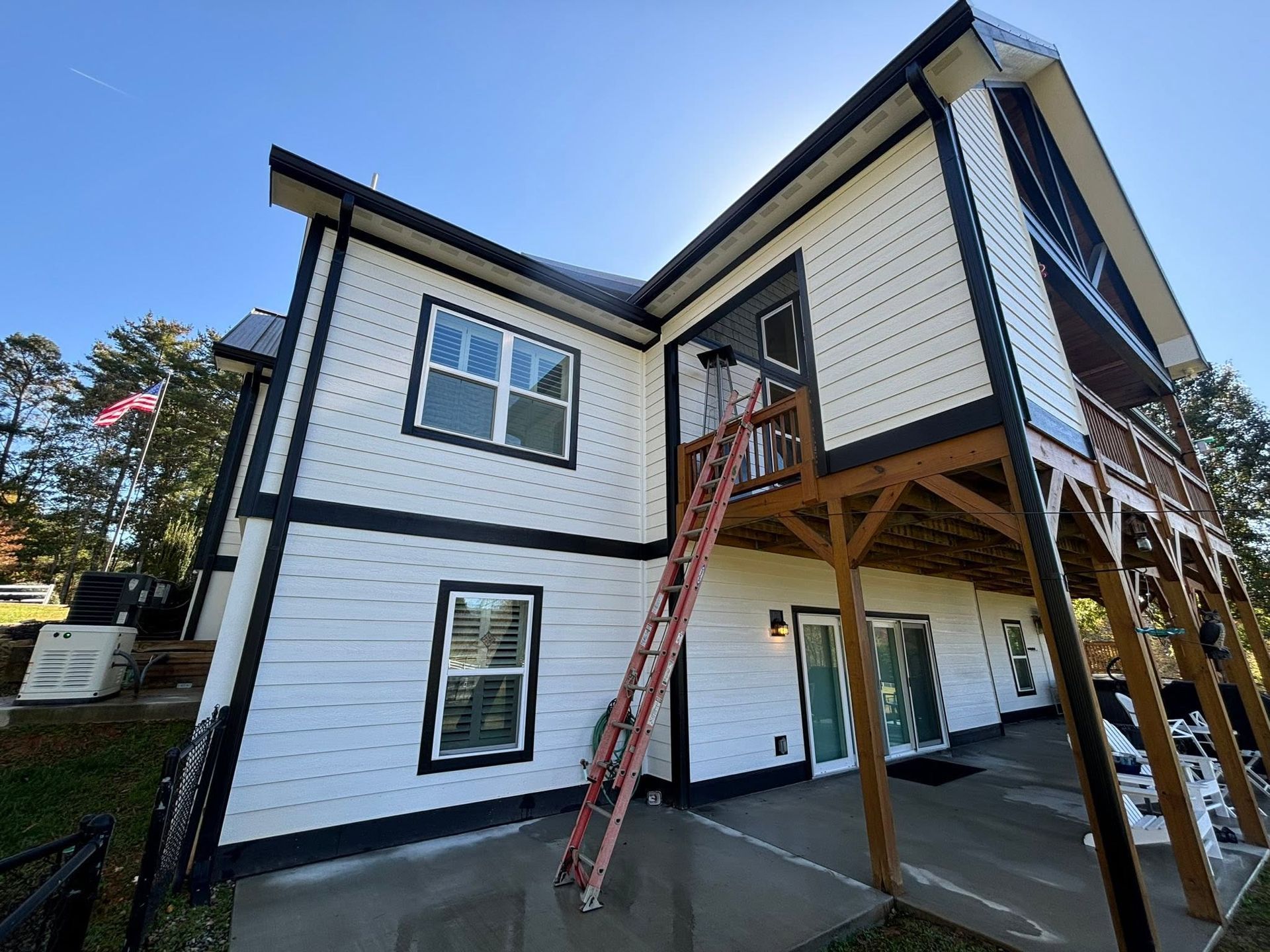
After cleaning, the surface returns to its original color rather than the green-gray cast that algae growth leaves behind. Grout lines between pavers, which tend to hold the heaviest biological buildup, become visible and consistent rather than darkened and irregular. The slip hazard that algae creates on a wet patio surface is removed once the growth itself is gone.
Aaron's Pressure Washing backs every patio job with a satisfaction guarantee and carries general liability coverage through Van Keith Insurance. Whether the sealer should be reapplied after cleaning is a decision that depends on the current sealer condition and the surface type—it is worth asking about when discussing the job scope.
What Property Owners Ask About the Work
Patio surfaces vary enough in material and condition that the cleaning process is not identical from job to job. The questions below address the specific decisions the crew makes and what you can check once the work is complete.
How does the cleaning solution work on algae and mildew between paver joints?
The diluted solution penetrates into the joint gaps and breaks down biological growth at the root level during the dwell period—rinsing after adequate dwell time removes the loosened material without requiring high-pressure injection that would displace the joint sand.
Why is pressure adjusted based on the surface rather than set at one level for all patios?
Stamped concrete has a textured imprint that high pressure will erode, and natural stone varies in hardness and porosity—etching or surface removal from the wrong pressure setting is visible as a dull or rough patch that contrasts with the surrounding area.
What should you check in the finished patio surface to confirm it was cleaned correctly?
Uniform color across the field, consistent joint appearance, and no dull or roughened patches indicate the pressure was matched to the surface—streaking or banding in the finish points to overlapping passes that were too aggressive.
How does an existing sealer affect the cleaning process on a Blairsville patio?
A damaged or peeling sealer can lift further during cleaning if the pressure is not reduced accordingly; confirming sealer condition before applying chemicals helps avoid accelerating a failure that was already in progress.
What is the difference between cleaning a concrete patio and cleaning a natural stone or flagstone surface?
Concrete tolerates a wider pressure range than natural stone, which can be porous or layered—flagstone in particular may have surface flaking that gets mistaken for dirt, so the crew checks the material before selecting a cleaning approach.
Aaron's Pressure Washing also cleans patios in Young Harris, Dahlonega, Helen, Cleveland, and Hayesville. To discuss your patio surface type and set up a cleaning appointment, call Aaron's Pressure Washing, LLC at (706) 897-1862.